We earn a commission if you buy through our links, at no extra cost to you.
Best Turntable for Vinyl Records: A Growing Collection
Which turntable suits a growing record collection? Tracking force, anti-skate, stylus wear, Library of Congress storage tips and four decks that fit.
At a glance
For a growing collection, the Technics SL-1500C adds a built-in phono stage and an auto lifter that raises the arm at the end of a side. The Rega Planar 3 suits listeners with a phono input, and the Pro-Ject Debut EVO 2 offers electronic speed change and upgrades.


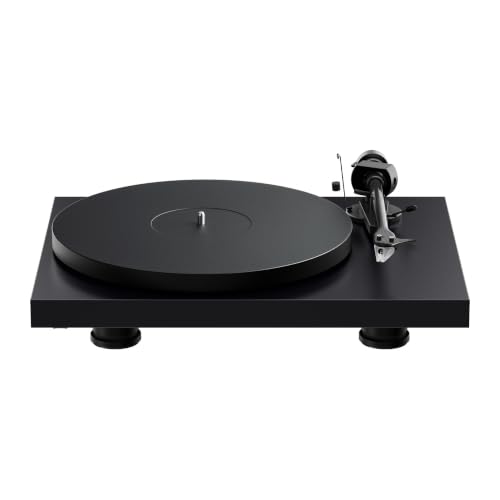
Once a record collection passes a few dozen albums, the turntable stops being a toy and becomes a tool. Records are fragile, and what touches the groove matters: a stylus that is worn or set up poorly can leave permanent damage, while a well-adjusted one can play the same record for years. This guide is for people who want to get more from a growing collection without ruining it.
We did not handle any of these decks ourselves. We compared published specifications from Technics, Rega, Pro-Ject and Fluance, read what What Hi-Fi? and Tom’s Guide reported from their own listening, and used the Library of Congress guidance for record care. For a ranking of every deck on this site, see our best turntables of 2026 comparison.
What a Growing Collection Needs From a Turntable
Four things matter most when records are the point, and none of them is a gadget.
A cartridge you can set up properly. The cartridge carries the stylus and sits on the tonearm. It must be aligned, so the stylus follows the groove at the angle the record was cut, and set to a tracking force. Tracking force is the weight, in grams, that presses the stylus into the groove. The cartridge maker publishes a recommended range. What Hi-Fi? gives 1.8 g for the Ortofon 2M Red on the Technics, Rega says 1.75 g for its Nd cartridges, and Tom’s Guide says the Pro-Ject Pick it MM EVO works well at 1.6 to 2.0 g. Too little and the stylus can skip and chip the groove wall; too much and it can wear the groove faster.
Anti-skate. As a record spins, the arm is pulled toward the center of the record. Anti-skate pushes back so the stylus presses evenly on both groove walls. Most arms have a dial or a hanging weight. Set it to the cartridge maker’s guidance.
A stable speed and a quiet base. Steady rotation keeps pitch accurate, and a solid, damped base keeps footsteps and speaker vibration out of the stylus. Place the deck on a level, rigid shelf, well away from the speakers.
A way to feed the signal to your system. A cartridge produces a tiny signal that needs a phono stage. Some decks have one built in, and others need an amplifier with a phono input or a separate preamp.
Belt Drive or Direct Drive
Belt-drive decks such as the Rega Planar 3, the Pro-Ject Debut EVO 2 and the Fluance RT85 use a rubber belt to separate the motor from the platter, which helps keep motor noise away from the stylus. The belt is a wear item and eventually needs replacing. The Technics SL-1500C uses direct drive, with the motor under the platter. Technics says the coreless motor gives high-precision, stable rotation, and What Hi-Fi? noted that the platter spins up quickly without the judder of many belt drives. Neither type is better in every way. Choose based on how you listen and what you want to maintain.
Stylus Wear and Replacement
A stylus is a tiny diamond and it wears with use. A worn stylus can damage the record it is playing. Note when you fitted it, follow the maker’s replacement schedule and keep it clean with a soft brush. Many cartridges accept a replacement stylus, so you do not have to buy a whole new cartridge. Fluance lists a replacement 2M Blue stylus for the RT85, and Rega’s cartridge range has step-up models above the Nd3.
Caring for and Storing Records
The Library of Congress gives plain guidance for handling and storing grooved discs:
- Wash and thoroughly dry your hands before handling records.
- Hold records by the edge and the label area only.
- Allow records from cool storage to reach room temperature before playing.
- Store discs upright, never stacked flat, on sturdy shelving with immovable dividers every 4 to 6 inches that support the full face of the disc in its sleeve.
- Do not store discs of different diameters together.
- Remember the weight: grooved discs average more than 35 pounds per shelf-foot.
- For a home collection, aim for a cool, relatively dry, stable and clean space of about 35 to 40 percent relative humidity, and avoid attics, basements and other places with leaks or extreme temperatures.
- Keep records out of direct light.
- Replace worn paper sleeves with high-density polyethylene sleeves when possible.
- Use canned air to blow away dust, and keep playback equipment clean and well maintained as the manufacturer instructs.
Isolation and Placement
Every turntable picks up vibration. A deck on a bookshelf next to a speaker will feed bass back into the stylus. What Hi-Fi? notes that the Planar 3 offers little more than three rubber feet for isolation, so it advises a light, rigid support away from the speakers, and Rega sells a wall shelf. The Pro-Ject has damped feet, and Tom’s Guide says it needs about 3 inches behind it to open the dust cover. Fluance gives the RT85 three height-adjustable isolation feet and a bubble level. Level the deck, keep the dust cover down during play and avoid stepping near it.
Phono Stage: Built In or Separate
If your amplifier has no phono input, a deck with a built-in phono stage saves you a purchase. Technics says the SL-1500C has a built-in phono equalizer with a switchable LINE output, and What Hi-Fi? called it “really good.” The other three decks below need a phono stage in your system. Both approaches work. A separate phono preamp can be upgraded later, and a built-in one means fewer boxes and cables.
Technics SL-1500C for Convenience and Protection
A direct-drive deck with a built-in phono stage, an Ortofon 2M Red cartridge and an auto lifter for collectors who want to plug in and play.
Technics says the Auto Lifter raises the cartridge when the arm reaches the end of a record, which prevents unnecessary wear on records and the stylus. It adds a built-in phono equalizer, an Ortofon 2M Red already on a detachable headshell, and 33-1/3, 45 and 78 RPM speeds. It is a premium deck, and Technics has added a newer SL-1500CS above it. Read the full Technics SL-1500C profile.
Rega Planar 3 for a Purist Hi-Fi System
A lightweight belt-drive deck with the Nd3 cartridge, built to extract detail from records when paired with a phono input.
Rega uses a lightweight braced plinth, a 12 mm (about 0.5 in) glass platter and a hand-assembled RB330 tonearm. What Hi-Fi? found the Nd3 cartridge improved detail, dynamics and imaging over the older Elys 2. Speed change is manual, and there is no phono stage, so plan for one. See the Rega Planar 3 profile.
Pro-Ject Debut EVO 2 for Upgrading Over Time
A belt-drive deck with electronic speed change and a carbon tonearm, easy to improve with a better power supply and sub-platter.
Pro-Ject lists an 8.6-inch one-piece carbon tonearm, a TPE-damped aluminum platter and the Pick it MM EVO cartridge developed with Ortofon. What Hi-Fi? found that the Alu Sub-Platter and High Power it 2 power supply improved the sound clearly. It has no built-in phono stage. See the Pro-Ject Debut EVO 2 profile.
Fluance RT85 for a Heavy Acrylic Platter
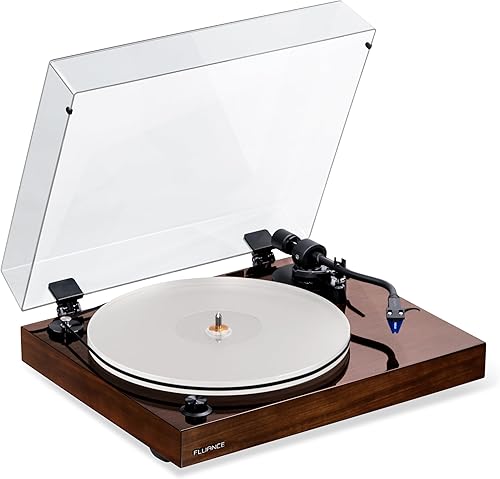
A servo-controlled belt drive with an acrylic platter and an Ortofon 2M Blue cartridge for people building a system step by step.
According to Fluance, the RT85 lists 0.07% wow and flutter, a defeatable auto stop and adjustable isolation feet. It needs an amplifier with a phono input or a separate preamp. Read the Fluance RT85 profile.
How to Choose
- No phono input and powered speakers or a basic receiver: the Technics SL-1500C.
- An amplifier with a phono input and a love of detail: the Rega Planar 3.
- You like to upgrade in steps: the Pro-Ject Debut EVO 2.
- You want a heavy platter and a good cartridge: the Fluance RT85.
Whatever you buy, set the tracking force and anti-skate to the cartridge maker’s figures, keep records clean and stored upright, and replace the stylus before it is worn out.
Sources
- Library of Congress: Care, Handling, and Storage of Audio Visual Materials
- Technics SL-1500C-K official product page
- What Hi-Fi? on the Technics SL-1500C
- Rega Planar 3 official product page
- What Hi-Fi? on the Rega Planar 3/Nd3
- Pro-Ject Debut EVO 2 official product page
- What Hi-Fi? on the Pro-Ject Debut EVO 2
- Tom’s Guide on the Pro-Ject Debut EVO 2
- Fluance RT85 official product page
Frequently asked questions
What is the best turntable for a growing vinyl collection?
It depends on your system. If you want a deck with a phono stage built in and an auto lifter that protects records at the end of a side, the Technics SL-1500C fits. If you already own an amplifier with a phono input, the Rega Planar 3, Pro-Ject Debut EVO 2 and Fluance RT85 give you more room to upgrade.
Does a better turntable protect my records?
A deck that tracks properly and keeps the stylus clean is gentler on grooves than one that is poorly set up. The cartridge, the tracking force and the stylus condition matter more than the brand name, so set them to the cartridge maker's figures and replace a worn stylus.
How should I store vinyl records?
The Library of Congress says to store grooved discs upright on sturdy shelving with immovable dividers every 4 to 6 inches that support the whole face of the disc, never together with discs of other diameters. It recommends a cool, relatively dry, stable space, about 35 to 40 percent relative humidity for home collections, and avoiding attics and basements.
Should I use a belt-drive or a direct-drive turntable?
Both can treat records well. Belt drive, as on the Rega and Pro-Ject, isolates the motor from the platter. Direct drive, as on the Technics, spins up quickly and holds speed with little maintenance. Pick the one that fits how you listen.
Do I need a phono preamp?
Yes, the signal from a cartridge must go through a phono stage. Some decks, such as the Technics SL-1500C, have one built in. The Rega Planar 3, Pro-Ject Debut EVO 2 and Fluance RT85 do not, so they need an amplifier with a phono input or a separate preamp.
How do I clean records safely?
The Library of Congress says to wash and dry your hands before handling, hold records by the edge and label, and use canned air to blow away dust. It also says to follow the maker's instructions for cleaning playback equipment.